Tuesday, 25 May 2010

May 19th: Brantôme

We left Tarragona on 17th May, following the coast motorway across the Pyrenees and into France. Continuing on the motorway, at Narbonne you either turn right for Provence or left for Bordeaux and the Atlantic coast. We turned left, and half way to Bordeaux we headed up through the Dordogne region, much loved by the Brits, and made for the town of Brantôme. Most small towns in the Dordogne are very picturesque and Brantôme is no exception, as per photos below.


However, the local tourist board do go a bit OTT. Brantôme is built on an island in the river, so the river flows all around it, but that hardly merits their logo description of the town as the “Venice of the Dordogne”!
The campsite is on the edge of town, by the river, and beautifully sectioned into large individual grass pitches. Since arriving, the temperature has steadily risen. However, that hasn’t stopped us getting about, as next entries show.

Friday, 21 May 2010

May 12th-17th: Tarragona

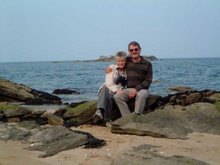
Javea to Tarragona is around 230 miles, not a huge distance, but there’s a slight change in climate: it’s a little cooler. The site is about 5 miles from Tarragona, on a headland with direct access to the sandy beach. One standard holiday beach photo coming up.
Being a beach site, it’s really geared for the summer holidays, when the prices soar. In common with most campsites, they offer 30% to 50% off-peak discounts to attract the limited supply of clients.
Even better, from the campers’ angle, many sites participate in the ACSI scheme. This offers even larger out-of-season discounts. To obtain these special prices campers need to buy the ACSI book (£11.50) that contains a list of all member sites and also a membership card. Then, all you do when booking in, is to produce your card and that entitles you to your pitch + 2 people + electricity for €15, 13 or 11 per night, depending on the site’s facilities. The site here was €15, having all the trimmings, but bearing in mind the high season charge would be €42, that’s a big saving. Most campers we know are members, as we ourselves are. It’s the best of both worlds, as we wouldn’t want the crowds and noise of peak season anyway. So here is our peaceful pitch featuring peaceful Jane.

Tarragona became the most important Roman town in Spain, but with roots going back even further. There is a well-preserved amphitheatre, roman walls and some restored buildings from that period, and a forum. There are also many grand medieval structures but I am often drawn to the smaller items like this ancient water trough, below, that bears a resemblance to a sad frog.

Following on the theme that small is beautiful, this carving from the external wall of the cathedral is wonderfully detailed and lifelike. Larger carved figures are often less intricate and look fairy wooden, perhaps because of time and therefore cost considerations, so some of these little pieces are artistic gems. Large sculptures do come into their own, in wealthy cities e.g. Rome, where they could afford the best craftsmen like Michelangelo.

Saturday, 15 May 2010

May 10th: The Guitar Maker

In a one of the Granada blogs I described walking through “Guitar Street” and admiring the flamenco guitars in the windows of the closed shops. On another day the shops were open and I went in to have a closer look and try one. It had a nice tone, but was it worth the money? Unsure, I left it.

But the idea of buying a flamenco guitar in Spain grew on me, and with the internet to help research what would be worth buying, I came up with the Burguet Guitar factory in Valencia. Here’s a picture from their website featuring Amalio Burguet, the master craftsman himself: probably as substantial as Mr Kipling, I thought, but good marketing.


They had replied to my email a few weeks previously to say that they do sell direct from the factory, so as Valencia is only an hour away from Javea, off we went to have a look. Little problem: haven’t brought the camera. The factory address was in a busy industrial complex on the outskirts of Valencia. No quirky little cottage industry here, but a modern medium sized unit that looked neat, tidy and wholesome externally, and had their business been in food products, you would have been happy to sample their pork pies.

We press the bell and are admitted by automatic door, revealing a stairs that indicates the direction of travel. So up we climb. The air is full of the aroma of wood and glue. I now have to take back all my Mr Kipling comparisons, because, rounding the corner at the top of the stairs, we come face to face with Amalio Burguet himself – instantly recognisable from the internet publicity. We are welcomed in and his daughter shows me the guitars I am interested in. One in particular appeals. It has a lovely tone, and at something like half the retail shop price.

Fortunately for me, another customer also in the showroom happens to be an ace flamenco guitarist. He has been playing amazing pieces all the time we’ve been there. Well, if you don’t ask…
He’s very amenable and takes my short-listed guitar, launching into some unbelievably intricate flamenco. He pronounced the guitar perfectly satisfactory. After that it was a done deal, and Jane bought it for me. You can see below it is a beautiful instrument, and I am delighted with it, but this may not be the sentiment of the neighbouring campers!

Tuesday, 11 May 2010

May 1st: The Birthday Party


Just to let you know that there’s a serious social side to camp life: we celebrated Brenda’s birthday with a lunch at the local village restaurant. You can see all the happy faces having tucked into the 4 courses for 8 euros including bread and unlimited wine.

They say you return to a second childhood as you get older. Absolute proof of this was demonstrated on the stroll back to the campsite. The gang came across a children’s playground and instantly the years rolled away! It also confirmed that the playground equipment was made to a robust standard.

May 6th: Now Javea

Today we moved 150 miles north to visit Jane’s sister Ruth who is spending the spring at Moraira. We are staying at Javea, 10 miles away, at a campsite recommended by some friends.

This is the site and our peaceful pitch, surrounded by orange groves, with Mount Montgo in the background. The gravel looks a bit stark but is actually a very practical all-weather surface. The photo below is taken from about the same spot at sunset showing a striking red sky.

It’s a nice, clean, well-run camp, with bins at frequent intervals, all equipped with bin liners. Ingeniously, they’ve solved the problem of having mucky, overflowing bins around the site. The notice attached to each bin indicates how this amazing result is achieved. It puts me in mind of a Goon show episode where they were going to dig a canal across the Sahara on which aircraft in difficulties could land. However, to avoid the chance of anyone drowning, they weren’t going to put any water in it!

Now for the family bit: Ruth, Colin & Jane. Photo taken by a Frenchmen, one of the few who aren’t still fighting the Napoleonic wars. It was a lovely spot near Moraira directly overlooking the beach.

Moraira itself is the usual ex-fishing village expanded into a small tourist town. The other type is ex-fishing village expanded into a large tourist town, e.g. Benidorm. Moraira’s harbour area is very pleasant with laid-out walkways and pavement cafes. The photo shows the marina with Calpe rock in the distance. Unbelievably, there are proposals afoot which would wreck this lovely view. The marina is privately owned and the owner wishes to extend the marina and enclose it with a 7-metre wall. He has the ear of the regional planners in Valencia apparently, despite local opposition, so it’s likely that Colditz Yacht Club will be built.

Monday, 10 May 2010

29th April: The Custom House


This is the Custom House, no longer in use, overlooking Cartagena Bay. It is reached by a long rough track and must have been an isolated posting for the customs officers when it was operational. One presumes that any suspicious activities they spotted would have resulted in a boat being launched from the little bay on the photo- the other side is a sheer drop. However, to get down to the bay is a tortuous, time-consuming scramble, which we can testify to, and I wonder how many smugglers got away while the customs officers were laboriously clambering down to their craft.

Stopping for lunch a few coves along from the Custom House, a bizarre sight was observed. Some strange coves indeed were seen, taking to the water and emerging…..starkers! I know I was probably hallucinating in the heat, but John was definitely hard put to finish his banana.

After lunch, some very rough walking. The area is known as the broken rocks, and is clearly a large cliff fall of fairly recent origin as the rocks are jagged with no weathering. One of the party sustained a bad graze here but happily carried on after some makeshift first aid. The air ambulance couldn’t have landed anyway.

The whole walk was over rough, stony, scrubland, but here is the exception: a small cultivated area in the middle of nowhere. It must get its moisture from the gully it’s in. The crop is corn, and looks spindly and weedy by comparison to UK fields. There are numerous disused hillside terraces formerly used to grow produce when there was not the alternative of cheap imports, so why has this patch survived? Is it a secret GM site, perhaps, glowing away in the dark where nobody can see it!

Saturday, 1 May 2010

April 27th: Espuña Natural Park

Today we have travelled further afield, to Espuña about 30 miles away. We have our Dutch friend Jan to thank for this expedition as he organises and leads most of our walks, having meticulously researched them beforehand. But first, coffee at Santa Eulalia Monastery on the edge of the Park. Parts of the monastery have been converted into a hotel and restaurant, hence our coffee stop.

The monastery church, shown above, is unusual. Inside, the walls are completely covered with paintings depicting St Eulalia. The roof is supported by carved wooden beams from which a large wooden galleon is suspended. I couldn’t find out the significance of the ship. At the altar end there is an ornate image of St Eulalia that is carried all the way down to the nearby town of Totana in December each year to celebrate the Saint’s festival. Do right by your patron saint and your patron saint will look after you, i.e. keep the tourists coming. So it’s well worth their efforts: we have been guided here by divine intervention, Jan had nothing to do with it.

A beautiful view from the café terrace, and we can also see our destination, the flat top mountain on the left-hand side horizon. The summit is 1583m high, or 5,200 ft in old money. Underneath is a closer view of the mountain taken from the start of the walk. The top is occupied by the military, hence the dome and aerials, and that part is out of bounds.

Soon we come to an unusual conical building, of which there are several within a few hundred yards of each other. These are ice-houses, in use from the 17th to 19th centuries. Snow was gathered during the winter and compacted into ice in these structures where it was stored until needed. It was then cut into blocks and taken down by mule often at night to minimise melting, even so, as much as 50% of the ice was lost because of the length of the journey, a full working day, to get it down the mountain and then to the large towns. Only the wealthy, of course, could afford this luxury. The coming of electricity finished the industry.

Moufflon goats were introduced into the park from the Atlas Mountains in North Africa. These roam wild and have large horns. The photo doesn’t do justice to their impressive appearance but you can see the size of the herd. You can apparently eat moufflon meat at local restaurants, perhaps in the form of “Desperate Dan” style pies with these big horns poking through the crust.


The mountain flowers were in full bloom. Some of these plants were unfamiliar to us, for example “nun’s cushion” as shown in the photo below. All I can say is, if nuns sat on cushions as spiky as these, they must have had very watery eyes.

As you’d expect with the air being fairly clear, there were lovely views at many places during the walk: see example below. We followed the waymarked trail in a 10 mile circuit, gently downwards at first but with a killer final ascent in the hot late-afternoon. It was a grand day out, to borrow a phrase from Wallace & Grommit.