Sunday, 17 October 2010

Wednesday 13th Oct: A Small Village

The guidebook’s starred locations don’t always yield the most interesting visits. Armena, which isn’t mentioned anywhere, stands in the hills behind Lake Orta, a fairly ordinary sort of place, with a nice church. Rounding a corner, we came across the communal wash-house, dated 1929. It was in a functioning state of repair, but presumably now made redundant by washing machines. Hand-washing drudgery it may have been, but they’ve lost the communal gathering and all that chatting and gossip.

A statue of a Saint by the church, quite usual, and as we approached it appeared that there were Coke cans and bottles by his feet. Was this indeed St Eco, the Patron Saint of re-cycling? Disappointingly, the cans and bottles turned out to be devotional candles.

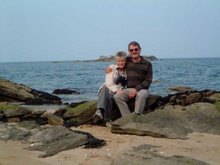
Back to the site, and there’s a lady swimming in the lake who convinces Jane that the water’s quite warm. “Gets to be 24, 25 degrees in Aug, early Sept.”, she says. "Yes, but it’s now mid-October", I’m thinking. But Jane is convinced: I’m not, and here’s the picture to prove it! Jane was in for about 15 minutes and said it was invigoratingggg....

Saturday, 16 October 2010

Orta Revisited

Being camped so close to the town of Orta we have walked in many time since our arrival. The walk to the town entails 10 minutes on the main road path, never the most ambient of places to stroll, and then 20 minutes of charming pathway most of which follows the lake shore.

The town itself is a series of narrow cobbled streets with a few shops, opening onto a square every now and then with more shops. The discoloured plaster adds to the charm. Hold on! Is that Padre Pio I can see peering out of the mottled brown wall facing us?

Today there’s a market in the main square and just off the square, in a courtyard, is a blacksmith who is making wrought iron goods. He’s in the process of fashioning a key ring to order in the shape of a leaf. It’s great spectator entertainment and safe enough even with the forge going full blast. I wonder if the blacksmith did a Risk Assessment?

We noticed a young couple immaculately dressed in evening clothes of yesteryear, romantically embracing on a jetty. Newly weds, maybe, or going to a ball on the island? It turned out to be a photo-shoot and unfortunately we didn’t find out for which publication.

The island referred to above is the island of St Giulio, half a kilometre from Orta. We went by water taxi for a visit. The church was magnificent, old and ornate, but no photos. The tomb of St Guilio is in the church. He came to the island in the 4th century and rid it of dragons & snakes: a 4th century Rentokil job. A cobbled road runs around the perimeter of the island, but on the inside of the buildings so there are few perspectives of the lake or the island. Actually, the prettiest view of the island is from the main square in Orta town, where the quays are.

Tuesday, 12 October 2010

Thursday 7th Oct: Lake Maggiore

Lake Maggiore is the longest of the Italian lakes, the northern end of which is in Switzerland. We drove along a stretch of the shore closest to Lake Orta where we're staying. This is also one of the most glam bits. We stopped first at Stresa, holiday venue of Queen Victoria, and took a lakeside walk opposite the picturesque Borromean islands. The island featured in the photo hosted Mussolini and Napoleon (not at the same time!) and can be visited, but we’ll need to come back.

Along the front at Stresa were a number of memorials to Italians killed in both World Wars. There were also monuments and statues commemorating military actions and it is interesting to note that none related to the period of Mussolini’s dictatorship. The poignant statue shown is of a soldier of the Alpine Corps in the First World War and his mule, when Italy was one of the allies.

Now on to the Colosso di San Carlone that overlooks the lake. This is a gigantic bronze statue of St. Carlo Borromeo. He was made Archbishop of Milan at the age of 22 in 1550. Including the base, the statue is 115ft tall and was completed in 1697. It can be climbed from the inside and is the second largest statue in the world where this is possible: the largest is New York’s Statue of Liberty. In fact, the designer of the Statue of Liberty, Frederic Bartholdi, studied this effigy when planning the statue for which Eiffel, of Tower fame, supplied the structure.

Sunday, 10 October 2010

Sacro Monte di Orta

The hilltop between the campsite and the town of Orta is a wooded park that looks down over the lake giving lovely views in all directions. This shot of the island in the lake is a good example.

The most impressive and unusual feature of this park is the collection of 20 temples it contains, each different in shape and size, built during a period of 90 years from the mid 17th century. They are beautifully and ornately constructed, as the photo of one shows.

The temples are dedicated to the life of St Francis, and each temple depicts a different scene from his life. This is the amazing part: these scenes are shown in wall and ceiling illustrations, and also life-size painted terracotta models, literally hundreds of them in total. UNESCO recognised the park’s unique quality 7 years ago by granting it World Heritage Status. The next photo shows a scene where St Francis is meeting the King. Observe that each model is individually cast, and has lifelike expression and movement as well as a superbly detailed painted finish.

Example 2 below, from another temple, even surpasses this with full-size horses and a man climbing a pole. St Francis is just around the corner being persecuted. It’s so realistic that you want to shout and put some backbone into St Francis: “Don’t put up with it, Frankie, hit him back!” Unfortunately, some of the paint has peeled to reveal the terracotta, but that’s still not bad after 350ish years in a damp atmosphere.

Thursday, 7 October 2010

The Italian Lakes

Last Thursday we left Interlaken and arrived at Lake Orta in Italy, near the town of Orta. Never heard of it? We hadn’t, either: it’s one of the beautiful smaller lakes near Lake Maggiore. We have a pitch right on the lakeside with a lovely view. The only downside is that the caravan portaloo nearly rolled itself into the lake, just about where Jane is sitting. Fortunately I grabbed it. Imagine having to hire a fisherman to trawl it out from the depths, assuming you could explain in Italian the equivalent of…”yes, that’s right, mate, it’s me bog. It’s down there somewhere…”

The town of Orta is a gem. It’s right on the lake and is full of old buildings, so inevitably attracts the tourists but it’s not gone tacky. Notice a few big coats, as the weather was changeable.

While we were in the square at Orta, a wedding party appeared and boarded the tourist transport back to one of the posh hotels on the edge of town. Puts a totally new meaning on: “did you see the bride’s train?”

We also came across a small courtyard dedicated to Padre Pio. He was sanctified by the Vatican in 2003, having led an austere life and had miracles attributed to him. He wasn’t a local lad, and the reason for the courtyard being full of Padre Pio tribute items was that a miracle was claimed to have occurred in the very house attached to the courtyard. An image of Padre Pio revealed itself in the peeling paintwork of a blank upper floor recess, with a photo as evidence. Below is my photo of the same peeling paintwork. You need to be focused on the area on the right of the window, and then decide where he is, like one of those puzzle pictures you did as a child.

Friday, 1 October 2010

Monday 27th: The Capital, Bern

The 26 cantons that make up the Swiss Confederation each has its own parliament, constitution and courts, so there is a great deal of regional autonomy. Over the top of this is the Federal Council and Parliament that is based in Bern, making it the federal capital. Bern is less than an hour by train from Interlaken and has World Heritage status because its centre is so well preserved, so it seemed a natural for a day out on the rover tickets. Picture 1 below is one of these elegant old streets, all arcaded, in fact the most arcaded city in the world.

It also must also be the fast lunch capital of Switzerland. See the guy scoffing a roll, bottom right hand corner, well practically every part of the arcades in this street had a fast-food stall or shop. Hundreds of folks were buying lunch and eating it in the street either standing up or sat on the step-up from the road to the arcades.
At the end of the street is the Zytglogge or clock tower, with mechanical figures performing on the hour. The original clock tower was made in 1218, of wood, but burnt down in 1405 and was replaced with the present one in stone. The wooden version was also a prison for a time for prostitutes that made a living servicing the clergy.

Bern’s emblem is the bear, and the statue shows a knight with a small bear at his feet holding a gun. As interesting as it may be to speculate on what the bear is intending to shoot, it has to be admitted that one’s eyes are drawn to the knight- they don’t make cod-pieces like that these days!

They take their bears seriously, and have made a bear park next to the remains of the old bear-bating pits by the river. There’s even a section of the river for the bears to swim in, so the wealthy with riverside gardens must have to occasionally contend with a bear lumbering up the lawn. This is also a pretty part of the town as the photo shows, the bridge being one of the oldest in the country. It is now a des res area but was formerly a self-contained district of craftsmen and dockworkers with their own language incomprehensible to other Bernese.

The last, rather austere, photo is of the HQ of the Swiss National Bank. It stands next to the Parliament building and symbolises the wealth of the Swiss nation created by the diligence of its inhabitants. This is the somewhat smug official Swiss picture. But there is another story: vast sums were made during the last war. For example, the Bank was buying Nazi gold right up to the very end knowing full well that these transactions were prolonging the misery of the war and that the gold was stolen, some of it in the most unimaginably awful ways.

Sunday, 26 September 2010

Thursday 23rd: A Walk in the Alps

Some campers on the site recommended this walk: an easy path with incredible views. We needed to start from a point 2,200 metres up that meant first a train, and then the cable car seen here in the photo. All included in our rover ticket, thankfully, as just this cable car, one-way, would have cost us £15 each.

It’s cooler at the top, but not cold, and we set off in bright sunshine on a well-surfaced path. The photo shows Jane rarin’ to go set against the backdrop of a huge vista.

It’s like walking at the top of the world, and we start looking for a handy rock to sit on to eat our sandwiches and enjoy the view. It must be that all other walkers have the same thoughts at this precise point because we come across the following notice written, as are all the best notices abroad, in quaint English.

Lunch being finished, and the debris suitably deposed in our dust-pan, we continued on the path that gradually rounded a headland of rock to lead into a south-facing valley. Here there were many more alpine plants in the rock crevices, and mixtures of heather and an unidentified red-leafed shrub covering most of the open ground, looking like a Scottish glen. The next two pictures are examples.


There’s been something of a problem taking the big mountain views on this holiday. The Eiger, Mönch and Jungfrau peaks dominate the scenery. You take them from all angles, distances and weather and light combinations. Yes, they are fantastic, but soon you realise that you’ve got far too many snaps of them, and none of them is as good as the professional photos in books, brochures and on the net. People are fed up with seeing them, anyway. After all that, would you believe it, I’ve included one last one of the north face of the Eiger! It just looks as if I’m about to climb it, alpenstock in hand, and be back in time for tea. We caught the mountain train down shortly after.