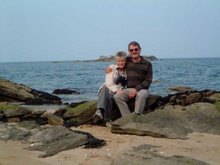
Wednesday, 2 May 2012

Out and About Near the Campsite

The campsite is in the middle of a large bay with Dubrovnik just beyond one end and the small resort of Cavtat at the other. Cavtat is the oldest settlement on this part of the coast having been settled by the Greeks in the 3rd century BC. There are no Greek remains as the town was ransacked a millennium later. It was a resort catering exclusively for the wealthy until tourism got going in the 1980s and still retains a classy feel as well as being highly photogenic. So, for the moment, it’s avoided a further ransacking by lager louts.
On the way back from Cavtat we stopped for a walk. The path wound down from the pull-off to the sea, passing small trees and scrub offering shelter to all sorts of creatures.
It’s difficult to spot birds flitting through this sort of dense undergrowth never mind identifying them, but this hoopoe obligingly sat on the path for us. Hoopoes are crested birds that, when in flight, look like giant butterflies.
Arriving at the end of the path at the seashore, we noticed a kind of shed housing these two enormous wine barrels. This area is an important wine producer and these barrels were evidently for bulk storage of wine. Although not containing any wine, the barrels were in good repair and seemed to have been in recent use.  However, there were no vineyards or wine presses anywhere around, or even any houses, so why the barrels were located here at the end of a dead-end road is a mystery.
Another nice view to finish with, over the scrub towards the offshore islands. Most of these islands have some dwellings and are serviced by car ferry from Dubrovnik harbour where we originally docked. The larger islands farther up the coast have substantial populations and a thriving tourist trade. Croatia has more than 1,000 islands, so there’s plenty of choice!

Sunday, 29 April 2012

Dubrovnik Old Town

Dubrovnik’s city walls are intact, dating mainly from the 12th and 13th centuries although extended and repaired many times subsequently. A great way of checking out the old city itself is to walk the full circuit of these battlements. There are some panoramic views of the re-roofed buildings in the town especially from the top of the fortress dominating the northern side looking in the direction of the sea.
Back down at street level, the town is laid out in a grid pattern resulting from the substantial rebuild following the earthquake of 1667 when 5,000 inhabitants perished. Dubrovnik also received a severe battering when it was shelled by Serbian forces during the Homeland War as it is known here, from November 1991 to May 1992. The destruction of that time has been so well repaired you would not realise that there had been any damage. The photo below shows the main street that contains the expected typical tourist shops, but quite reasonable quality and prices (i.e. we’ve seen a lot worse!)
There are some interesting historic buildings that predate the earthquake, for example the Sponza Palace and the municipal bell tower in the next photo. The Sponza Palace was once the city’s customhouse and mint, with an inscription inside designed to deter merchants from cheating on weight: “When I weigh goods God weighs me”
The bell tower contains some detailed figures that strike the bell on the hour and, so my guidebook tells me, are known as the “Greenies” on account of their weathered copper colour. They are however copies of the 15th century originals.
On either side of the main thoroughfare, the parallel streets run on higher and higher levels, especially heading for the North Gate, the exit needed to catch the bus back to the campsite. Take a look at the one we plodded up. It looks pretty at the start and pretty exhausting at the top.
The overall strong defensive position of the town is best shown in this last photo, taken from the road leading out of Dubrovnik. Unfortunately, it’s looking towards the sun but the circuit of the massive walls can be clearly seen and the characteristic red roofs. Invaders these days are confined to tourists and cruise ships, which are welcomed rather than repelled.

.


Friday, 27 April 2012

Mlini and Camping Kate

At this time of the year, out of season, it’s not usually necessary to book in advance. You like the description of a site in one of the campsite books, or maybe somebody’s recommended it, and just turn up generally anytime from mid-afternoon onwards. But this time we’re rolling into Camping Kate at 8.00am, one hour after docking. The proprietor is there waiting. This is obviously normal on overnight ferry days. He’s really pleasant and speaks almost perfect English, having worked in New York.
Given a free choice, we select a spot at the far end of the site over looking the sea. This is the view from the patio slightly beyond our pitches.
A knee-trembling set of steps leads down to the little harbour of Mlini. It takes its name from the Latin word for mill, Molina. Two large streams rush headlong down the hillside on either side of the campsite and these flow under some of the buildings, with channels and sluices formed to divert the flow of water. These we can see from the steps and are clearly the former mills. On the day we arrive the streams are in flood and have become torrents, so the view from the steps provides a spectacle of roaring water. To give an idea of scale, the river (hardly a stream now!) is about 4 meters in width. 


Mlini is a small, pretty village where the two streams meet before flowing into the sea. There’s yet another old mill complex here with a 250 year- old plane tree spreading over the water. How do I know it’s 250 years old?  Conveniently, there’s a plaque on the tree in Croat and English giving its history. We are finding that where a second language is used it’s always English. 

The walk along the front, a pedestrian path of several miles to the next village, gives some lovely views through the pine trees into the bay. This is almost a daily walk for us and as part of the routine we reward ourselves with an ice-cream to give us the energy to climb up those steps back to the campsite.

Wednesday, 25 April 2012

April 18th: Nearly Not Bari to Dubrovnik

To catch the ferry to Dubrovnik we needed to cross from Rome, on the west coast of Italy, to Bari on the east. It was a full day’s drive and we arrived at Bari port just after 6.00pm. Loading commences at 8.00pm for the 10.00pm sailing. We hadn’t pre-bought tickets, and the ticket office was closed but a queue was already waiting outside the ticket window, so the signs were good. At 7.00 the lights came on, the blind was raised and two faces appeared at adjacent ticket window.
We get our turn at 7.30ish after being queue-jumped several times by bus tour operators each with 50 passengers’ passports to be checked and tickets issued. Feelings of outrage firmly under control since nobody but the British rigorously obey the rules of queuing.
Paul and Trish’ motorhome is no problem, but here is an English caravan that has no official registration document. I explain that no such document exists in the UK. The car registration document covers everything and the caravan is just a towed box we sleep in.
The ticket office clerk wasn’t having any of it.
“No papers, no ticket, as you going outside EU. You must ask police then maybe we give you ticket. Police in Terminal, that way.”
Her hand waved vaguely towards the far side of the port. The wave was more dismissive than directional, and anyway the far side of the docks was swiftly sliding into a filmy curtain of darkness.
It wasn’t negotiable. There is only one ferry company, Jadrolinija, running this route so you need to comply with their rules, however exasperating. And time is ticking on: it’s 7.45pm, nearly loading up time. The next ferry is in two days time.
We discover there’s a shuttle bus to the Terminal, which Paul and I catch leaving Jane and Trish to keep an eye on the vehicles. At the terminal we can’t find the police, and anyway why would the Italian police care what went to Croatia, surely that would be the concern of the Croatian police?
Before despair has time to set in, we have a great stroke of luck. The information desk at the Terminal is manned (womanned?) by a large Mrs Fix-it. Speaking good English, she takes up our cause with a missionary zeal. Within 10 minutes she has rooted out the police, customs and an official from Jadrolinja all of whom see no reason why the caravan should not travel to Croatia. She gets the Jadrolinija official to phone the ticket office to instruct them to accept the caravan. Job done. Just a dash back on the shuttle, buy the tickets and proceed to the loading queue. Phew!!
The ferry left at 10.00 and chugged on through the night to Dubrovnik. All cabins are knocked up at 6.00am to partake of the free breakfast before docking at 7.00am. The photo below, taken on the way to breakfast, shows the cold light of dawn with its washed-out colours as we near the Croatian coast.
After breakfast a new world emerges as the sun paints its first rays on the final approaches to Dubrovnik. It’s a scenic canvas of inlets, small islands and red-roofed houses. We dock and drive out of the port, eager to see more.
A small but relevant post-script: the customs weren’t particularly interested in the caravan and weren’t scrutinising our documents. It was just another tourist vehicle, a cursory check and then they waved us through.

Sunday, 22 April 2012

The Vatican State

To many people, St Peter’s Basilica and the Vatican are one and the same, but the Vatican is much more: it is the power-base of the Catholic Church. As well as being the spiritual leader, the figurehead of that powerbase is the Pope. So it was with a sense of purpose that we went to see the Pope deliver his Sunday blessing at mid-day. This is us, waiting for mid-day, with several thousand others in the huge St Peter’s Square.
Everyone has a clear view of the Pope as he appears from an upper window of his apartment, to the right just off camera. He delivers his blessing in numerous languages, including English, and there is much inter-reaction as people cheer when it’s their language’s turn. We did feel a sense of occasion, separate from any religious context.
In past times, the Vatican’s political power put the Pope and his administration at risk from invading armies. The Vatican buildings themselves were not designed as fortifications, but Castel Sant Angelo half a mile away, also part of the Vatican’s domain, certainly was. So a “secret passage” was constructed giving the Pope and his staff the chance to dash to the safety of the castle when the going got rough. It’s not much a secret as the line of the passage can be easily defined by following the ventilation slits in the wall leading to the castle. It’s interesting to speculate whether they held time trials with the Pope and Cardinals to ensure speedy evacuation, cheering the winner past the finishing tape. Only small bets allowed of course.
Our next topic has nothing to do with the Vatican, at least I hope not! The Mafia. Not much in the news these days, and maybe its because of the success of the organisation behind the tablet in the photo. It reads "Direzione Nazionale Antimafia".In the UK we take it for granted that the police has national organised crime contained if not eradicated, but what must it be like when it isn’t, as in Italy? Don Corleone (aka Paul) poses alongside the plaque.
Let's end on a really cheerful note: a street ensemble playing in a piazza near the Vatican. And very professional, too. Rome seems to come up with these unexpected delights so often. So now it’s arrivederci Roma, and dobar dan Dubrovnik in a few days.

Thursday, 19 April 2012

Rome's Wonderful Churches

Rome has over 900 churches, and those at the top of the range are designed and decorated with unequalled scale and magnificence.
Santa Maria Maggiore is such, and is one of the four churches in the city under the direct control of the Vatican. The original church was built when the Virgin Mary told the Pope in a dream in 352 AD to build a church at the exact spot where it would snow overnight. So he did. The miraculous bit wasn’t the dream, but the fact it was 5th August and a hot Roman summer! The structure has been improved and embellished many times since: from the photo underneath, it could be a palace.

The detail, quantity and quality of workmanship is beyond comprehension. Take the panelled ceiling as an example. Each of the hundred or so panels is exquisitely and identically formed even though the naked eye can’t see the details (these days the camera can).

Beautiful inlaid marble floors are the norm, as in this one from the church of Santa Maria in Aracoeli.

Nothing, however, quite prepares you for the size and splendour of St Peter’s. It’s the second largest church in the world (the largest is on the Ivory Coast, of all places). The first church was consecrated on this site in 326 AD following Rome’s first Christian Emperor’s conversion to Christianity. The photo below is an example of just a small part of its incredible opulence.

You’ve got the floors and walls above, now let’s look up at one of the domes. It seems to be glowing from within.

These descriptions are far too sketchy, but maybe it’s best done this way or it would fill 10 volumes. We’ll round off with an example of one of the sculptures. It’s Michelangelo’s Pietà, surely one of the most beautiful carvings of all time and one that he created at the age of only 23. In 1972 some nutcase attacked it with a hammer, so now it’s behind glass. All entrants get security checked airport-style to prevent any further incidents.

It was definitely culture overload, but an experience not to be missed.

Wednesday, 18 April 2012

Ancient Rome

Legend has it that Rome was founded in 753 BC by Romulus and Remus. There is no historical evidence to support this tale, but experts say it dates from around that time. The Roman Empire’s power was at its height from the century before Christ’s birth to the end of the third century AD and most of the ruins and excavations relate to this period. The photo looks in the general direction of the forum where Shakespeare’s Mark Anthony made his famous “Friends, Romans, Countrymen, lend me your ears” speech. It isn’t recorded whether he gave the ears back, having borrowed them.

The Coliseum symbolises Rome: buy a souvenir bag or tee-shirt and that image will almost certainly be on the it. Even in its partly ruined state it is impressive. Finished in AD 80, it held up to 50,000 spectators with access corridors are so well designed that it could be emptied in minutes. Gladiatorial contests were not always to the death and there is no record that Christians were persecuted here. However, the spectacles were bloody and on a large scale. A few years after its completion a 117- day victory celebration involved 9,000 gladiators and 10,000 animals, most of whom met their deaths. Even football violence can’t match that.

The Pantheon was dedicated as a temple to all the gods, and its current appearance dates from 120 AD. The gods must have been well pleased with this shared arrangement because the building is in a remarkably well-preserved state. In 608 AD it became a Christian church, thereupon our God must also have done his bit towards the upkeep. The photo doesn’t convey its awesome size; particularly of the roof which is the largest non-reinforced concrete dome ever made.

What is truly amazing is how some of these ancient buildings have been adapted but the end result is still visually harmonious. The photo underneath is of Marcellus’ Theatre (17BC), the arches looking remarkably like a smaller version of the Coliseum, which was initially pillaged for materials to build a nearby bridge. It was a fortress in the 11th Century, and then a luxurious palace in the 16th C, the remaining upper floors looking like apartments.