Tuesday, 3 October 2017

Monument Valley

We head for Monument Valley, the iconic cowboy film location. How this came about is an interesting story that we’ll look at later in this blog.

It’s barely 100 miles from Moab to Monument Valley, and good roads. We pass through the town of Mexican Hat and see how it got its name from the balanced rock at the edge of town that looks like a sombrero.
We think we see our destination in the distance. A long, straight road leading to misty, jagged pinnacles. 
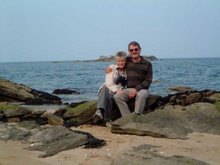
The campsite is in the village of Monument Valley and we are allocated a pleasant pitch. Here’s Jane sat nodding in the sunshine like a cowboy who’s ridden 50 miles. To be fair, she’d had worse- me driving for 50 miles.
The campsite is called Goulding’s Camp Park; the store in the village is Goulding’s Supermarket; the hotel is Goulding’s; the garage is Goulding’s. Everything is Goulding’s. There is a reason.
Harry Goulding and his wife bought a large area of land in Mounument Valley in the early 1920’s as a business opportunity. They had the idea of running a trading post, bartering food with the Navajo Indians in exchange for their hand crafted items like blankets and jewellery. These they sold on.
The Gouldings lived in tents for a few years then built a permanent premises with comfortable living quarters above. This still stands and is now a free museum. Pictures below show the Trading Post first, then their lounge.

The Trading Post was a success, both for the Gouldings and the Navajos. But the great depression of the 1930’s caused the demand for Navajo products to plummet. The Gouldings then had a desperate idea to bring back prosperity to the Valley. They decided to travel to Hollywood to persuade the film makers to use the Valley as a location.
By perseverence, they got to see top director John Ford and showed him their photos of the Valley. He was suitably impressed, and agreed to use it as the setting for his latest cowboy film, Stagecoach, starring a new actor called John Wayne.
The film was duly shot against a background recognisable today, as shown by the following Stagecoach film clips and my photos of the same scenes.


Stagecoach was a hit and launched John Wayne on his carreer of over 140 films. The Gouldings did the catering and accomodation for the film crew and actors. It was a financial success for the Gouldings and for the Navajo. They were hired as extras on top money for those days: $5 per day or $8 if they brought their own horses.
The film company also hired the Medicine Man so that it all ran smoothly with the Navajo extras.. For this he was paid $15 a day and, as John Ford said, worth every cent. Here he is.
As part of the museum, the filmset cabin from Stagecoach has been preserved. It still looks the part, complete with shifty character outside.
Inside the décor is authentic except for the cheesy lifesize cardboard cutout of John Wayne that I’ve left off camera.
The museum stagecoach also looks ready to roll for the next take.
Director John Ford made many films at this venue and had a particular spot he liked to spend time just gazing at the view. It’s now called, predictably, John Ford’s Point and you can pay $5 to sit on a horse contemplating that same vista or $0 doing so on foot.
It’s still a popular film location: literally dozens of movies have been shot here. The museum cinema  has free nightly showings of  early John Wayne movies, but we weren’t here long enough to fit that in.
However, we did take a tour of the Valley, run by Gouldings of course, with a Navajo guide.The Navajo is the subject of our next blog.


Saturday, 30 September 2017

Canyonlands

This is the biggest park in Utah. It’s full of spectacular canyons and other geological features. It’s also got many dirt roads, used today by off-roaders like jeeps, dune buggies and macho tour vehicles such as humvees.
The roads predate the tourist trade and were built to service the mineral extraction industry. Uranium was discovered as early as 1910, but it was the discovery of a rich lode in the 1950’s that created the mining boom. This was the cold war era at its most intense and the population of Moab tripled between 1950 and 1960.

The photo shows a low-level and a high-level dirt road. The high-level road runs just below the canyon rim with an unprotected 1,500 foot drop. The off-roaders are welcome to it!
But all the mining roads seem to contain a suicidal section. This safe looking low-level road on the left of the next photo heads straight for the edge of a canyon within the main canyon. It’s got a name, “White Rim Road”, which describes its course precisely along the edge of the rim, and it runs for over 100 miles.
The lower canyon is carved by the Green River, which flows 700 feet below the White Rim Road, and is a spectacular sight in its own right.
Looking deep into some of these canyons with binoculars reveals some odd structures, columns hundreds of feet tall that could almost be made of brick. They aren’t, of course, just jagged, chaotic shapes carved over millions of years.
We did see a some creatures, not many with all the tourists around, but there were quite a few chipmunks that moved too quickly to photograph. This one obliged.
Some of the groups of grasses and pieces of dried wood grouped together almost into a formal garden.
 Now we’ll leave Canyonlands (doesn’t it sound like a Disney theme park), and follow the Colorado River upstream before it reaches Canyonlands. The scenic drive is a regular road next to the river with pulloffs to admire the views. The 1,450 mile long Colorado is a big river even here, 1,000 miles from the sea. 
And it still manages to have carved out a canyon through which it swiftly flows.
So it’s a good river for the adventurers as there are sections of rapids for the rubber boats to negotiate. They don’t seem to be too challenged here, though. Easy to say that when you’re stood on the riverbank.
Tomorrow we leave Moab for Monument Valley. There are many more locations we could have visited, but we are close to gobsmacked overload. 


Thursday, 28 September 2017

Arches National Park

Arches, the closest park to Moab, was designated a National Monument in 1929. We asked ourselves how could this one be much different from other National Parks we’ve seen. The theme is rock formations and arches, hence the name. The scene is set soon after the entrance. The freestanding rock pillar in the center is several hundred feet tall.
Some pillars could have been deliberately carved into recognisible shapes. This one is called The Sheep.
Size is sometimes difficult to appreciate in photos. Balanced Rock, as it is called, is the size of three school buses and weighs an estimated 3,500 tonnes. That’s not cement, by the way, keeping it in place, but  a different strata of rock. There are many other examples of precariously balanced boulders.
So let’s now look at some arches. This is Double Arch with a span of 148 feet. You may pick out tiny figures that are people going to and from the arch.
 North and South Windows resemble a pair of spectacles. Bit heavy on the nose perhaps.
Worth a second glance are the fantastic shapes of the ancient dead juniper trees. Navajo Indians collect and dry juniper berries from living trees to make necklaces.
The arches are all sorts of strange shapes. This is turret arch, with a waving figure in the background to give an idea of scale.
The oddest arch is Delicate Arch. It looks like the bottom half of a body, and is 60 feet tall. Some arches are genuinely precarious: in 2008 one fell.
There are a staggering 2,000 plus arches altogether, The previous photos  show some of the more notable ones, but we didn’t have the time and energy to find the biggest. Landscape Arch is in a more remote part and is the world’s largest at 290 feet span.

No-one lives in the park because no-one is permitted to in any National Park, other than those essential for running the parks. But before 1929 there were a inhabitants were drawn to this wilderness. Here is Jane outside her dream home, the ex residence of a Mr Wolfe.

John Wolfe left his wife and children in Ohio and journeyed west with his eldest son in 1898. They settled in this valley and built a cabin, eking out a living by subsistence farming. A daughter came in 1906 and was appalled by their primitive living conditions. She insisted they build a new cabin with a wooden floor. This is the upgraded cabin- so what must the predecessor have been like! 
Other past dwellers include the Ute Indians who left some animal rock etchings near the Wolfe ranch. The experts say that these were carried out some time between 1650 and 1850.
 At one pull-in we watched the antics of a raven on the back of the truck in front. He dived into the back clearly looking for food. It pays dividends: a chap told us he’d seen a pair of ravens a few days earlier find and devour a packet of crisps, a bag of Gummy Worms (jelly babies) and an apple. Smart birds. 
Finally, the narrowest possible entrance. I’m squeezing between the rocks, if you can recognise the dark figure. Junk foodies beware!
But worth the effort. A golden sandstone arch about 20 feet high awaits on the other side.
Yes, Arches National Park was different and impressive, attracting 1.5 million visitors a year.


Tuesday, 26 September 2017

Dead Horse Point

Dead Horse Point is a State Park 35 miles from Moab. There’s some interesting scenery on the way. The information board names these two outcrops, properly called buttes, as the Monitor and the Merrimack respectively. These two ironclad battleships fought each other to a standstill in the Civil War. These guys don’t look as if they’ve moved much in the last couple of million years.
A few miles along the route is another stopping point. We pull over. Doesn’t look too interesting, but the board tells us that these flat rock areas are fundamental to supporting life in such dry regions. Rain is captured by the rock hollows, from which animals drink, with some containing life forms like fairy shrimps. Algae grows in patches on the rocks. This is all part of the fragile ecosystem.
At mile 35 we pay our $10 park entry and carry on to the first overlook. It’s something like the Grand Canyon but not so deep.
In the top right hand corner is a river or lake. Closer inspection reveals several large ponds that the ever-present info board tells us are potash beds. Water is pumped down to dissolve underground mineral salts and brought to the surface as a solution, then piped into shallow evaporation beds. Once fully dried out, the potash is harvested by laser-guided 20 tonne scrapers. 
We have a mini Grand Canyon here because it’s the same Colorado river that has created big brother a few hundred miles downstream.
Outside the visitor centre is a dinosaur footprint captured in rock. It’s about 6 inches square and looks like a giant chicken footprint. How many soldiers would you need for that boiled egg?
Dead Horse Point itself is the end of the road. There’s a sheer drop on all sides apart from the narrow access strip. Notices warn to keep away from the edges.There are too many viewpoints to be fenced and, anyway, it really is up to visitors to take responsibility for following the safety code and using common sense. The couple sat by the wall overlooking the 2000 foot drop are just about safe enough, but we saw people stood on the wall and even jumping up for photos and selfies. “Smile…back a bit…!”
Finally, the sad tale of how Dead Horse Point got its name. Wild mustangs roamed this area in the 19th century and cowboys would round them up to select the most marketable ones first and come back for the others later. Dead Horse point was the ideal place for such a round-up. The mustangs could be herded onto the neck of land and then the narrow access barricaded. They were thus firmy corralled. One time, they contained a herd, taking the prime horses and leaving the others. But they didn’t return, and the remaining horses died of thirst and starvation, in sight of, but unable to reach, the Colorado River.
Looking in the direction of the flow of the river from this high vantage point, the vastness of the canyon system created over the millennia becomes apparent.
I’m sure we all take too many digital photos, but showing you any more of the park would be like, um,….flogging a dead horse. Boom boom.


Sunday, 24 September 2017

Cedar City to Moab

We took a leisurely two days to travel to Moab, stopping overnight at Walmart. Walmart is the Tesco of the USA but, unlike Tesco, is happy for motorhomers to park up overnight. It works both ways, the campers get a free night, with Walmart 24 hour security in attendance, and Walmart get in return the extra pairs of eye and ears from the campers should any thieves or vandals think of dodging around security. Also, the campers shop in the store, as we do.

There aren’t many purpose-built motorway services compared to the UK; there may be pulloff fast food places that are signposted, or you can use the rest areas and make your own food. The rest areas are spasmodic, but this road is well supplied, and for lunch we stop atanyway one with information boards. It looks down over a vast and desolate plain.
The panels tell of early Mormon settlers who saw the area as a potential cattle prairie, but were warned off by the Indians because of the dryness and lack of good water. But the Mormons went ahead anyway and eked out a living. They obviously didn’t do that well as there is no sign of cultivation, livestock or dwellings today. The mountain behind is most eye-catching, but that doesn’t put food on the table.
Shortly after leaving the rest area the road runs through a steep gorge. So much rock has been blasted away, it begs the question whether a tunnel wouldn’t have been cheaper.
 We noticed black skies in the distance over an hour go. Now it’s catching up with us. The photo is not so much for the heavy rain clouds as for the unusual flying saucer shaped cloud. Quite disappointed that we weren’t of sufficient interest to be abducted.
We pull in to another rest area to change drivers just as the storm breaks and the wind whips up. It takes everyone by surprise, including the rest area rubbish collector who is caught, literally, with his trousers down.
I’m now driving and can honestly say these are the worst conditions I’ve ever experienced: rain in buckets and fierce gusting wind. We pulled in to a layby when it got too bad. Not far to the site, fortunately, and luckily some respite in the deluge as we set up in our pitch. But not for long, the downpour and lashing wind is back again. Little rivers are running down the road and through the pitch.
 By the end of the evening the tempest has run its course, and next day dawns bright and warm. We discover we have a really pleasant pitch at the edge of the site with a fine view of the cliffs. Happy holidays again.