Saturday, 4 June 2022

Bourges: 1st June

 Bourges is Peterborough’s twin town, so we thought we’d drop in to see how it compared as we were staying in the area. We parked in a modern multistorey on the Avenue de Peterborough at the edge of the old town and walked into this delightful old squares. Bourges Boulevard in Peterborough also contains car parks and direct access to the city centre.

The old town streets are almost all original medieval buildings, for example this road leading to the cathedral.

We are reminded that Bourges is on one of the great pilgrimage routes by the cockleshell symbols inlaid into the paving.

The cockleshells inevitably lead to the large cathedral of 13th century construction.

Inside, it’s amazingly tall. They used cutting edge building techniques for its day.
The really stunning feature is the original stained glass. They clearly had no local Cromwell to wreck what he considered unnecessary ornamentation. The photo is but a small sample of the stained glass, each piece of which tells a biblical story.

There’s also an intricate clock made for the wedding of Charles VII to Marie d’Anjou here in 1422. It looks like it’s portable, like a carriage clock, but it’s 15 feet tall and Charles VII is not described as a giant. 

Outside, some of the carvings are amazingly detailed, scenes of Judgement Day that can’t be fully appreciated from the photo. Thankfully, it’s scary stuff!

There are some fine touches on individual buildings in the streets, like this lion face that looks like he’s burst into song.

The palace of Jacques Coeur is the largest and most ornate in the city. He was a shipping merchant, moneylender and arms dealer: a Mr Big, and also Charles VII’s finance minister.

We do the tourist info map circuit and end up back at the car park.

Peterborough has a long history, but nothing like the number of old buildings surviving as in Bourges. The cathedrals stand comparison: Peterborough’s is slightly older and each are of great historical significance. The outskirts of the cities are, superficially, similar with unremarkable suburbs.

It’s an hour’s drive back to the campsite when we later had this lovely sunset.


Wednesday, 1 June 2022

St Germain Les Belles

 In the 16th century King Henry IV of France stayed in the village of St Germain and was welcomed by so many handsome female wellwishers that he ordered the village be renamed St-Germain-Les-Belles-Filles. Somehow the “Filles” (ladies) bit has dropped off, so it’s now just “St Germain the Beautiful”. We certainly got a beautiful pitch in the campsite right by the lake.

The village itself looks solid. The old lock-up looks like it could safely house the Kray twins.


The church is a fortified church, so much the same style, no doubt served by a well fortified priest.

But there are some pretty buildings like the bakery/newsagents.

Grocery shopping needs the supermarkets of the nearest town, Uzerche, but we have a look around first. The old town is built on a rocky pinnacle in a loop of the river. The way up is impressive.

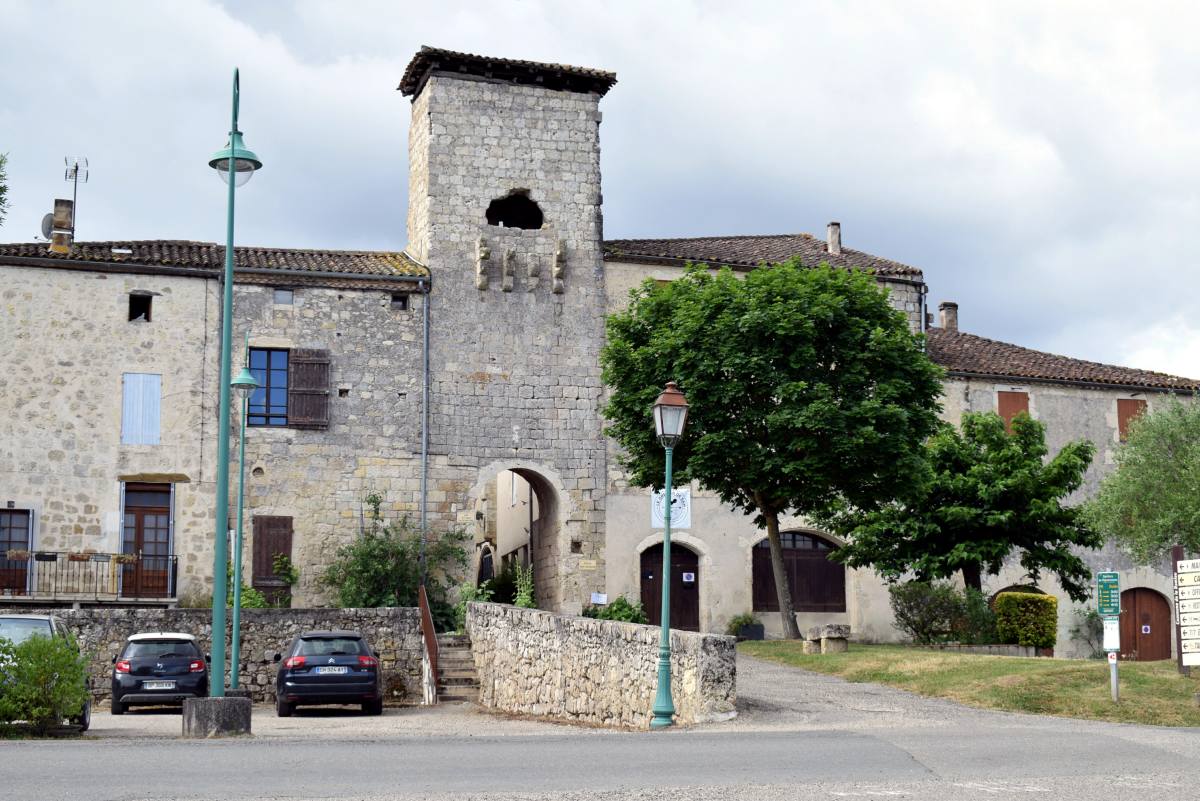
After coffee and a croissant, we entered the old town through the fairy-tale gatehouse.

At the centre is another massive church, oddly next to a modern, very ordinary house

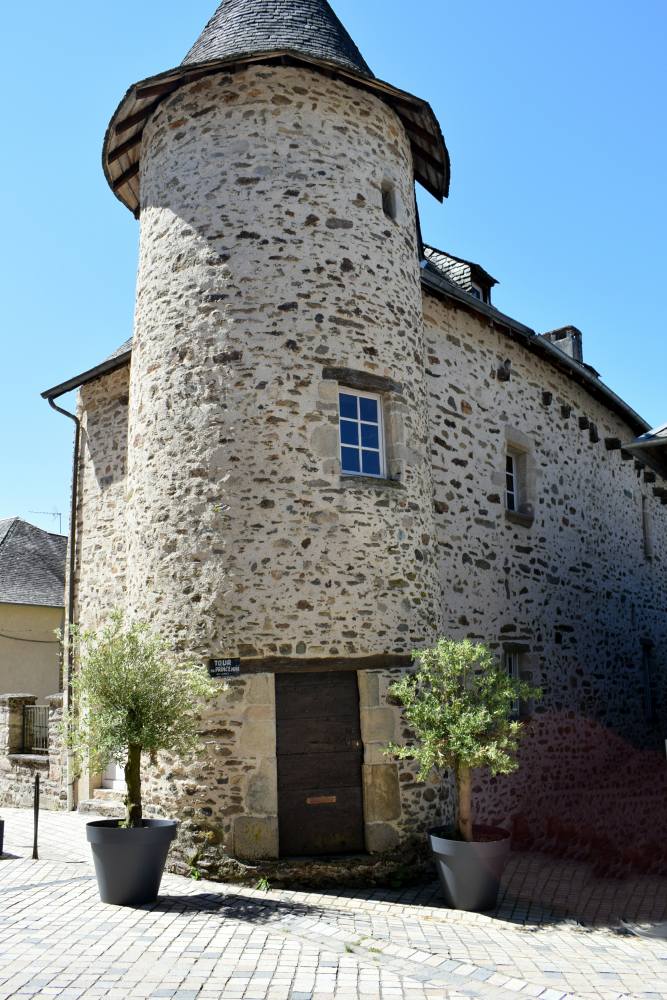
More old buildings as we strolled through the streets. This is the 14th century tower of the Black Prince. The plaque didn’t say if it was built by our Black Prince, the son of Edward III, as the date is right and he did lead armies to conquer parts of France including this area. But maybe you’d just play down a defeat.

We saw lots more of these fairy-tale roofs and buildings, e.g.as in the next two photos.


Now we’re back down to river level, so here’s the river, the Vezere, that almost encircles the old town.


We looked over to the opposite bank and saw that the old houses there, although not so ancient, were of fairy-tale quality. One asks oneself - how many overhangs could they build upwards before it all comes crashing down into the river?

These old places have a timeless harmony that we struggle to achieve with modern towns, but future generations will surely be drooling over our windfarms, electricity pylons and new towns that we find so depressing. So hang on in there Corby and Stevenage!


Sunday, 29 May 2022

Condom: 25th May


We travelled the 7 miles to Condom to do some supermarket shopping as La Romieu is only a tiny village. Let’s deal with the elephant in the room right now and say that we stopped bringing back local gifts for family and friends many years ago!

It’s a pleasant town with a long history and many old buildings, and was part of the English Crown for a time from 1152 when Eleanor of Aquitaine married Henry II.

Almost always there’s a lovely church or cathedral, and here it is, built in the 16th century.


Beautiful stained glass inside set off by the harmonious proportions of the pillars.

Outside we saw a statue of four swordsmen – the three musketeer. It seems no. 4 comes as an extra freebee. The story is set vaguely in this area, but apart from these statues we didn’t see any Three Musketeers tearooms or Porthos’ Pubs etc.

The cathedral and statues form part of the central square, all in this very light stone. Condom is also on the pilgrim route, so we saw a few more cockleshell heroes. But wait – there’s a pilgrim’s donkey here as well, tied up behind the church. On closer examination it turns out to be the very same donkey we photographed in La Romieu, so the pilgrim (+ donkey) has plodded on another 7 miles since the day before yesterday.

The town is on a hill as were many old communities for defence reasons, so we walked down the hill to the car park by the river. There were a number of vacant shops on the way but the painting of different scenes on each frontage helped to take away the air of dereliction.

We finish with a pleasant river scene. River trade must have been important in past times but the quay opposite is now used as a car park. We didn’t notice anywhere a town coat of arms and wondered, as a parting shot, what it might consist of. Maybe it’s the single “adults only” coat of arms in France.


Friday, 27 May 2022

La Romieu

 We are in the Gers region of France, 100 miles from the Spanish border. We didn’t know where that was either, but we’ve struck lucky with this lovely old walled village, walkable from the spacious campsite. You enter the village through a gate in the wall.

Once inside, the village retains a medieval feel, as the next two photos show.

The village was established as a stopping point for pilgrims by two German monks, in 1082, on their return journey from a pilgrimage to Santiago in Spain. It became an increasingly important centre for pilgrims so that by the 14th century one of the Pope’s local  administrators decided to build a huge church incorporating fortified walls enclosing the village.  The church and walls look impressive even now.

The church was attached to a monastery constructed at the same time. The cloisters can be seen, but are almost crumbling away.

We noticed an ancient funeral cart parked in a corner, too flimsy to be in current use, but maybe ok as a prop in a Dracula film.

La Romieu is still an important stage for pilgrims heading to Santiago using the ancient pilgrimage route, now designated as long distance path GR35. Pilgrims bound for Santiago traditionally wear a cockleshell symbol and we observed many walkers with this emblem. One such pilgrim even had a donkey loaded with his clothes and camping gear, probably as many medieval pilgrims would have done ( but without the ipad).

The village has another story to tell: the legend of Angéline. She was an orphan who surrounded herself with cats for companionship. Then, after several consecutive years of famine, the villagers were forced to eat their cats to survive. But Angéline had kept some of hers hidden away. Now came a good harvest, but the grain was being eaten by rats as there were no cats left to control them. Ah, but there were, and Angéline’s heroes saved the day! It is said she even got to look like a cat, as this stone carving outside the tourist office indisputably shows.

The fun bit is that, as her cats are the emblem of the village, there are numerous cat effigies to be spotted in various places. A kind of feline “where’s Wally” hunt; for example:

The village is really beautiful, and the church/monastery bears another photo from a different perspective.

Getting back to the real world, the communal wash place was in use until the last century. It is fed by one of the many springs issuing from under the village. It reminds us that times past weren’t defined by the romantic old buildings we see today – life was often unbelievably tough, so hang on to your cats!


Tuesday, 24 May 2022

The Pyrenees

 It’s another hot day for our journey from Albarracin to the Pyrenees: 34C in the shade. We arrived mid-afternoon at our destination campsite, Camping Gavin, and chose a terraced pitch overlooking the foothills. The sound of cowbells drifted up from the valley. All very pleasant, as the photo shows.

The cowbells carried on into the evening, at a volume which would indicate a large herd just outside the campsite boundary several terraces below.  Still pleasant, yes; too loud, yes; conducive to sleep, no. We decided to investigate the following morning, and took the footpath to the village that ran just outside the camp boundary where surely we must pass the cowbell culprits. The path is an ancient track and very atmospheric.

However, we didn’t see any cows although we could hear them through the undergrowth. We carried on to the village, of solid stone construction to protect against the mountain elements. Flimsy coastal tourist condos just wouldn’t survive here.

We stopped for a reliably tasty and cheap coffee in the village. Jane’s trying to hide behind one of the umbrella poles where we were sitting.

We took a different route back to the campsite as we were determined to flush out the source of the cowbells. And here they are, only 20 to 30 happy cows vigorously chomping on the lush grass of this small meadow. Nothing like the large herd we were expecting. It’s a just a pity the bells aren’t tuned to harmonise so the cows could be trained to play, say, “Viva España” or “Ding Dong Merrily on High”.

The following day we went into the high Pyrenees at Ordesa National Park. Here’s the dramatic approach. There is snow, but not much on the vertical rock surfaces.

The tourist centre for the park is village of Torla, even more solidly set in stone than our village near the campsite.

We came across lots of serious walkers doing steep trails, but we opted for a more gentle river walk.

The river was a fast-flowing green/blue colour, perhaps from recent snow melt following the sudden high temperatures (34C again today). The old bridge we next came to was the perfect vantage point to observe the rushing current.

Downstream, we saw this group of kayakers preparing to take on the white water as it flows through  a gorge.

A close-up shows how skilful these folks were, as these were boiling rapids. So here goes!

We have had an enjoyable but hot few days in the mountains, and now we go to the village of La Romieu in France.