Saturday, 20 June 2009

June 10th- 16th: France, The Lot Valley


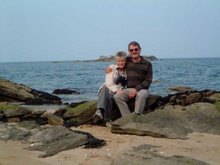
One days drive from Barcelona takes us to Vers. This is a village near Cahors with a municipal campsite on the banks of the river Lot. The photo is taken from the end of the camp where we were pitched. It is a beautiful setting and very peaceful – apart from Friday night when a gang of noisy campers partied until the early hours. They left on Saturday morning after consultation with the warden!

The village above is St Cirq Lapopie, a short drive away from Vers. It clings to the cliffs above the river Lot and is mostly medieval. The houses below are typical. It did have a number of expensive boutique clothes shops, souvenir stores and restaurants, but did not come across as too touristy.

Had to really include the photo below of Cahor’s famous bridge, the Pont ValentrĂ©. It dates from the 13th Century and, when we walked over it, we were impressed by how sturdy and well repaired it still was. Half expected a troupe of Knights to come clopping across, but had to make do with a party of schoolchildren.

The weather was a comfortable 25 to 28 degrees maximum. To sum up, this area’s got the Lot! Now, sitting in Calais car ferry port writing this, two days after leaving Vers, temperature 15 degrees, reminds us we’re now back to real Summer weather.

Friday, 19 June 2009

June 9th: Barcelona Part 2


We wanted to get an overall feel of Barcelona, so where better to start than with Gaudi’s architecture, and the city’s no.1 attraction the unfinished cathedral Sagrada Familia. Gaudi worked on this, on and off, for 43 years until his death in 1926 (run over by a tram). He based his designs on natural forms- trees & plants, crystals, shell patterns etc. and work is currently proceeding towards completing the cathedral using these principles. It is planned to finish it by 2030. The next photo shows some tree-like main support pillars that are of the recent construction.


Gaudi’s own work is much more ornate, and presumably accounts for the 43 years he put into it. The photo below illustrates the wealth of detail above the entrance doors in the main facade that is part of the original structure.


More Gaudi below – a block of apartments in the centre of the city. Note the flowing lines and organic appearance. It is remarkable to think this building was constructed in the early 1900’s.


This one below, again, is all curves, but more highly decorated with tiles.


As we said in the previous blog, Barcelona is an elegant city and the final pic of the fountains, and Jane, in the Placa de Catalunya sort of sums it up. Pity about the yellow barrier, but this is a “warts and all “ show, folks.

Monday, 8 June 2009

June 7th: Barcelona


All major ports in Spain seem to claim theirs was the departure point for Christopher Columbus’ discovery of America. Barcelona is no exception and has a huge commemoration column to prove it!

Starting at Christopher Columbus on the waterfront, we walked up the most famous street, which is called the Rambla. There are stalls, artists and street performers everywhere, most quite unusual and amusing, but what a way to earn a living! The clown below roamed around making a nuisance of himself by e.g. putting his wig on bald passers-by and startling women with a whistle. We watched him while having coffee at a pavement cafĂ© and were much tickled. If not for the clown’s gear, he would surely have been arrested.

The Rambla itself is full of elegant buildings, like the Opera house. The picture below is of a house decorated with classical style figures and objects.

We walked from the Rambla a short way into the Gothic Quarter, the oldest part of the city that houses the cathedral and many lovely squares. The lovely square in the photo below is Jane.

One more for the road: a medieval courtyard with a classical guitarist who was very good. It’s a sad comment that he was getting fewer donations than the clown!

Picasso Museum next stop, but obviously no photos allowed. The museum was laid out in the chronological order of Picasso’s life (1881-1973), from his early roots as a portrait painter through his blue period and on to cubism. Apart from the portraits, we were generally rather baffled by his work, but it was a really interesting experience.
Barcelona came across as a clean, stylish and vibrant city, with plenty to see. We only scratched the surface but we’ll report more after our next visit tomorrow.

Sunday, 7 June 2009

June 3rd: Moving On

We have said several time we would like to see Barcelona, so here we are. Not exactly in Barcelona, but 30 miles south in the small town of Vilanova with a good rail link.

The campsite is huge, 1,000 pitches, but the terrain is hilly and it’s split into areas so it doesn’t seem too overwhelming. It’s even got a small zoo as well as the obligatory large swimming pool (x 2), supermarket, restaurant etc.

The picture shows Vilanova - the name means “new town”. It’s a pleasant if unremarkable medium-size town laid out in a grid system. No, I don’t think it looks like Huntingdon with trees.

Tuesday, 26 May 2009

May 20th: Bol Nuevo


Boll Nuevo is a small seaside town near Mazarron, after which the tarmac road is replaced by a dirt road that continues along the coast. Bol Nuevo itself has a fine sandy beach and a campsite right on the beach. The pitches are, however, small and contain an obstacle course of trees.

The track follows round some picturesque bays, see photo, where the red rocks look particularly striking. With so many little inlets and coves along this coastline, it offers good cover for illegal immigration. The local press often reports the police or customs picking up their usually much overloaded boats, which must have travelled over 100 miles from the North African coast. There are, however, quite a number of North Africans, mainly Moroccans, legitimately working in Spain, in the tomato greenhouses, for example.

Other furtive characters can more frequently be spotted in these little bays: the nudists. They are allowed to use a designated strip of coast (get it – “strip” !!) along from Bol Nuevo, and are all males, sometimes to be seen striking a pose in a high visibility position. The walking group tends not to stop for lunch breaks at these locations as it puts you off your sausage sandwiches.

Thursday, 21 May 2009

May 15th: A Surreal Experience!


The photo above is of a dead palm tree and a small thriving one, taken on one of our walks. Nothing much out of the ordinary. Now using the same photo and applying a photo-shop programme, you get:

Wednesday, 20 May 2009

May 12th: The Mines Part 2

Going on an organised walk this time, we saw some more obscure areas in these long-established mines. The photo below shows an original Roman mine-working and, although not visible on the picture, a close examination revealed the chisel marks made by those ancient miners. Working conditions must have been abysmal, but then that description would apply to mining of any era.

This could almost be one of those soda lakes in Africa. As it is, it’s an evil chemical residue left from the mining operations. Anyone who falls in instantly dissolves.